

What is a Poverty Mindset. When most people hear the term “poverty mindset,” they often assume it only applies to those who are financially struggling. However, the reality is much deeper and more nuanced. A poverty mindset is a way of thinking that keeps individuals trapped in limitations, regardless of their actual financial situation. It’s a set of beliefs, habits, and attitudes that can prevent someone from achieving their full potential. People with this mindset often focus on scarcity, fear, and limitations rather than possibilities, growth, and abundance. This type of thinking shapes decisions, relationships, and even long-term life outcomes.
At its core, a poverty mindset revolves around the idea that there will never be enough enough money, resources, opportunities, or support. It can lead to constant stress, anxiety, and hesitation, as individuals may believe that taking risks is too dangerous or that success is reserved for others. This mindset is not inherently linked to wealth; someone might be earning well but still think like a person with limited means. Understanding what a poverty mindset truly entails is the first step toward breaking free from its constraints and cultivating a mindset geared toward growth and abundance.
Origins of a Poverty Mindset
The roots of a poverty mindset often go deeper than simple financial struggle. Many people inherit these patterns of thinking from their upbringing, cultural environment, or personal experiences. For instance, growing up in a household where money was constantly a source of stress can instill beliefs such as “I will never have enough” or “I am not capable of managing wealth.” Similarly, cultural messages, media portrayals, and societal expectations can reinforce the idea that financial scarcity is the norm and success is reserved for a select few.
Psychological research also suggests that fear plays a significant role. Scarcity-focused thinking triggers stress responses that make people hyper-focused on short-term survival instead of long-term growth. This can manifest as an unwillingness to invest in oneself, fear of failure, or reluctance to take opportunities that involve risk. Over time, these mental patterns become habitual, making it increasingly difficult to recognize opportunities or take proactive steps toward abundance.
Characteristics of a Poverty Mindset
Recognizing a poverty mindset requires understanding its common traits. People with this mindset often exhibit chronic worry about finances, a strong focus on limitations rather than possibilities, and a tendency to compare themselves to others. They may prioritize saving excessively out of fear rather than strategy, or avoid investments in personal growth, education, or career opportunities. Another hallmark is the tendency to blame external circumstances instead of taking proactive control over one’s life.
Additionally, a poverty mindset often comes with a scarcity mentality, where there is a constant fear that resources, opportunities, or wealth are limited and hard to come by. This scarcity thinking affects decision-making, relationships, and overall life satisfaction. Even when presented with opportunities for improvement or growth, someone with a poverty mindset may hesitate, doubt their abilities, or assume they are undeserving, reinforcing a cycle of limitation and self-imposed barriers.
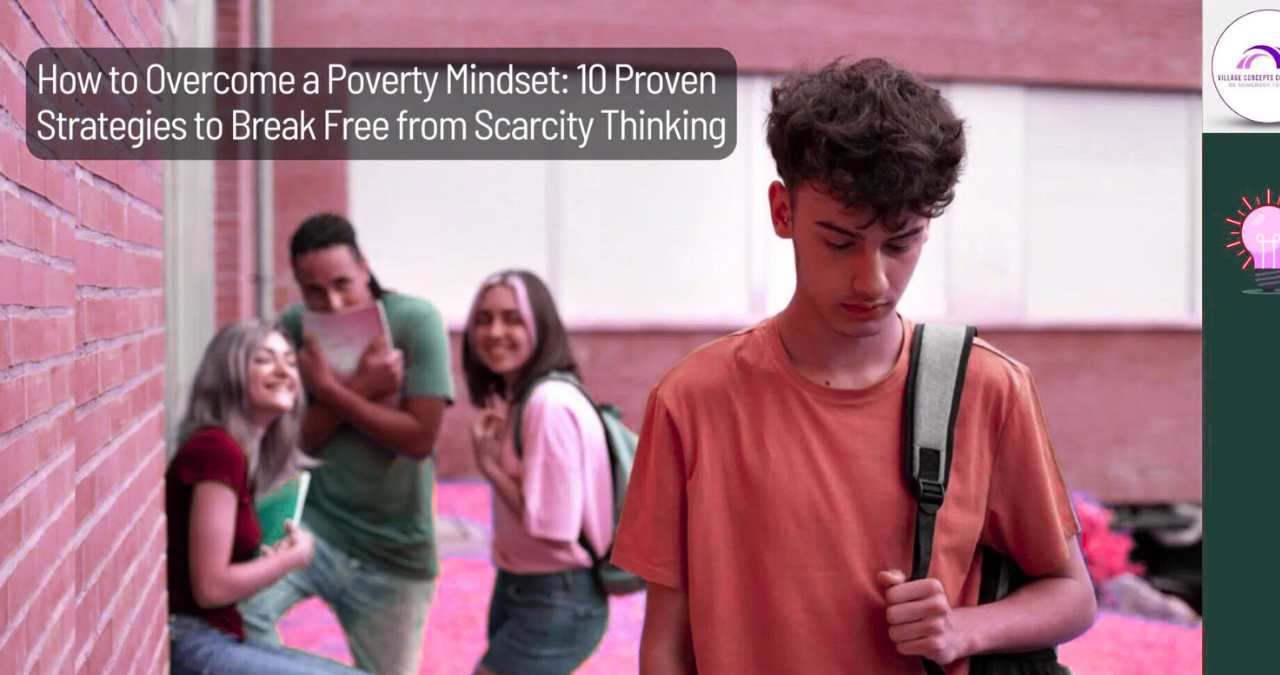
How a Poverty Mindset Impacts Life
The consequences of a poverty mindset extend far beyond financial outcomes. Emotionally, it can cause stress, anxiety, and feelings of inadequacy. Professionally, it can hinder ambition and risk-taking, making it harder to seize career opportunities or start entrepreneurial ventures. Socially, it may influence relationships, as a person’s fear of scarcity or neediness can affect trust and connection with others. Overall, a poverty mindset creates a self-fulfilling prophecy: by expecting limitation and failure, individuals unconsciously make choices that align with these beliefs.
Even those who achieve financial success can feel trapped by this mindset. Without conscious effort to shift thinking, wealth may be accompanied by anxiety, fear of loss, or difficulty enjoying abundance. Overcoming a poverty mindset, therefore, is not just about earning more; it is about fundamentally changing the way one thinks about money, opportunities, and personal potential.


