

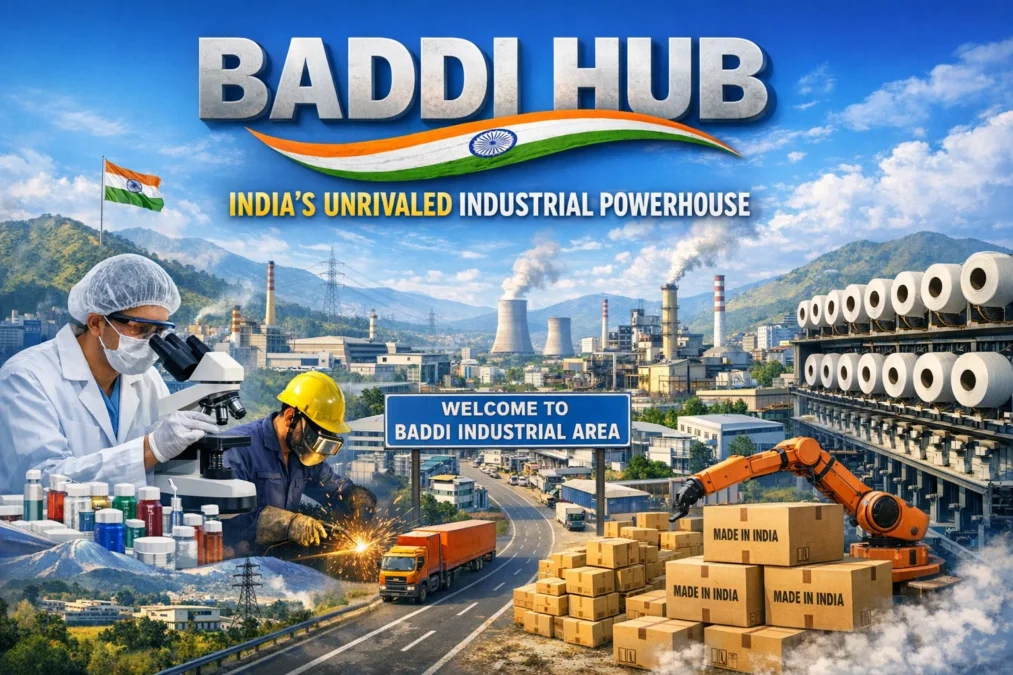
Baddi Hub. This Nestled in the foothills of the Himalayas, the name “Baddi” has become synonymous with industrial transformation and economic dynamism. What began as a quiet, agrarian region in Himachal Pradesh has, over the past two decades, exploded into one of Asia’s most concentrated and strategically vital manufacturing clusters. This is the story of the Baddi hub—a remarkable ecosystem where policy, geography, and ambition converged to create an engine of national production. Today, it stands not just as a collection of factories, but as a fully integrated industrial nerve center, pivotal to India’s self-reliance in pharmaceuticals, FMCG, and engineering. This comprehensive guide delves deep into the anatomy, advantages, and future of this colossal industrial hub, offering investors, entrepreneurs, and industry professionals an authoritative look at why Baddi remains an unparalleled destination for growth and innovation.
The Genesis of an Industrial Phenomenon
The creation of the Baddi hub is a masterclass in targeted economic policy. The catalyst was the Industrial Policy of Himachal Pradesh, 2003, which offered a powerful package of incentives, including central excise duty exemptions and income tax benefits. This wasn’t a random act; it was a strategic move to catalyze development in an industrially backward but geographically accessible region. The policy brilliantly leveraged Baddi’s proximity to major consumption markets like Chandigarh, Delhi, and the broader North Indian plains, while its location in a hilly state qualified it for special status benefits.
Companies, first in trickles and then in waves, recognized the unparalleled value proposition. The initial movers were largely from Punjab and Haryana, seeking relief from infrastructural saturation and higher operational costs. As pioneers set up shop and success stories multiplied, a powerful cluster effect took hold. The Baddi hub transformed from a policy-driven incentive zone into a self-sustaining, magnetically attractive industrial ecosystem, where being present became a competitive necessity for entire supply chains.
Pharmaceutical Dominance and the Bulk Drug Revolution
If India is rightly called the “Pharmacy of the World,” then the Baddi hub is its most critical production floor. The region accounts for a staggering percentage of India’s total pharmaceutical manufacturing, particularly in formulations, tablets, capsules, and syrups. This dominance wasn’t accidental. The excise benefits provided the initial cost advantage, but it was the aggregation of talent, compliant manufacturing facilities, and a supportive regulatory environment that cemented its status. Today, global pharma giants and ambitious domestic players alike operate state-of-the-art plants here, adhering to WHO-GMP and other international standards.
The evolution within the pharmaceutical segment is noteworthy. From being primarily a formulation hub, Baddi is increasingly moving into higher-value domains like active pharmaceutical ingredients (APIs) and complex generics. This vertical integration within the hub mitigates supply chain risks and enhances India’s strategic autonomy in drug production. The dense concentration of pharma units has also spurred a parallel boom in ancillary industries—manufacturers of packaging, machinery, printing, and logistics services have all flourished, creating a deeply interwoven and resilient industrial tapestry.
The Expansive Industrial Portfolio Beyond Pharma
While pharmaceuticals are the crown jewel, the industrial landscape of the Baddi hub is remarkably diverse. Fast-Moving Consumer Goods (FMCG) majors have established massive production bases here, churning out everything from packaged foods and beverages to personal care products for the northern Indian market. The plastic and polymer industry thrives, feeding into packaging needs for all other sectors. Electronics manufacturing, particularly consumer durables, has found a strong foothold, alongside a robust presence of auto components, textiles, and heavy engineering units.
This diversification is a key strength, providing the hub with remarkable economic resilience. A downturn in one sector is buffered by stability in others. Furthermore, it creates unique cross-industry synergies. A plastic unit might serve a pharma packager and an FMCG company simultaneously. This multi-sectoral fabric ensures that the ecosystem’s talent pool, logistics networks, and service providers are constantly evolving and adapting, fostering a culture of innovation and operational excellence that permeates beyond any single industry vertical.
Decoding the Incentive Structure and Policy Framework
The initial rocket fuel for Baddi’s growth was undeniably its attractive incentive package. While the central excise duty exemption period has concluded for most units, the legacy benefits created an irreversible first-mover advantage and entrenched the ecosystem. Crucially, the area still enjoys benefits under the Himachal Pradesh Industrial Policy, which may include subsidies on land, power, and investment for eligible enterprises. Furthermore, its classification as a “backward area” continues to offer certain income tax deductions, making it financially attractive for long-term capital deployment.
Understanding the current policy landscape is vital. The Baddi hub now operates within a mature framework where compliance, environmental regulations, and sustainable growth are paramount. The focus has shifted from pure tax arbitrage to operational efficiency, scale, and cluster advantages. Investors are now attracted not just by what the government gives, but by what the ecosystem itself provides: unparalleled supply chain integration, readily available skilled and semi-skilled labor, and a proven track record of successful industrial operations. The policy today enables stability more than it triggers initial gold rushes.
World-Class Infrastructure and Seamless Connectivity
A hub is only as strong as its connections, and Baddi excels in its logistical orchestration. Its geographical positioning is its silent superpower. Situated approximately 30 kilometers from Chandigarh, it is seamlessly connected via the Chandigarh-Baddi National Highway. This places it within a single-day trucking distance to the massive consumption markets of Delhi NCR and the agrarian heartlands of Punjab and Haryana. The proximity to the Chandigarh International Airport facilitates the movement of high-value, low-volume goods and critical business travel.
Within the cluster itself, infrastructure has evolved tremendously. From initially grappling with the demands of rapid growth, the region now boasts developed industrial estates with reliable power substations, wide internal roads, and efficient drainage systems. Continuous efforts are underway to expand road networks, manage water resources sustainably, and enhance digital connectivity. This constant infrastructure upgrade is essential to support the next phase of growth, ensuring that the physical arteries of the Baddi hub can keep pace with its industrial heartbeat and ambitions.
Labor Dynamics and the Skilled Workforce Ecosystem
The success of any manufacturing cluster hinges on its human capital, and Baddi presents a unique case study. It draws a significant workforce from the immediate Himachal region, known for its disciplined and adaptable labor, as well as from neighboring states. This has created a large, diverse, and multi-skilled talent pool readily available for industries. Over the years, the workforce has accumulated deep sector-specific expertise, particularly in pharma manufacturing processes, machine operations, and quality control—a form of institutional knowledge that is hard to replicate elsewhere.
However, the evolution of the hub is now driving demand for higher-order skills. Recognizing this, industry associations and government bodies are increasingly collaborating on vocational training and upskilling initiatives. The focus is shifting towards mechatronics, advanced machinery maintenance, digital literacy for shop-floor management, and stringent compliance protocols. This proactive approach to skill development ensures that the workforce remains a source of competitive advantage, moving from being a cost-efficient resource to a quality-driven, productivity-enhancing asset for the entire industrial corridor.
Environmental Stewardship and Sustainable Growth
As a dense industrial zone, Baddi has faced and continues to navigate the critical challenge of environmental sustainability. The early phases of breakneck growth underscored the imperative for robust environmental management, particularly concerning effluent treatment and air quality. In response, the region has developed one of the largest and most sophisticated Common Effluent Treatment Plants (CETPs) in the country, a collaborative marvel that serves hundreds of manufacturing units, ensuring that industrial wastewater is treated to safe standards before discharge.
This journey towards sustainability is now a core part of the Baddi hub’s identity. New units are mandated to adhere to strict environmental clearance protocols. There is a growing emphasis on green manufacturing practices, energy efficiency, and zero-liquid-discharge technologies, especially among larger, forward-thinking enterprises. The narrative is transforming from remediation to prevention and innovation. As an industry leader noted, “The future of manufacturing is green. Our commitment in Baddi isn’t just about compliance; it’s about building an industrial ecosystem that can thrive for generations without compromising the environment.” This shift is crucial for its long-term viability and social license to operate.
The Critical Role of Ancillary and Support Industries
The true measure of an industrial ecosystem’s maturity is the depth of its supporting value chain. The Baddi hub shines in this regard. It is not an island of finished goods manufacturers but a dense network where every primary industry is supported by a web of specialized service and component providers. Packaging giants operate here, supplying everything from glass vials and PVC blisters to corrugated boxes and labels. Engineering workshops fabricate custom machine parts and provide critical maintenance support around the clock.
This ancillary ecosystem dramatically reduces the “cost of business.” A pharmaceutical company can source packaging, printing, logistics, and machine repair locally, minimizing downtime and inventory costs. It fosters incredible operational agility. The presence of specialized logistics providers, cold chain facilities, calibration labs, and safety equipment suppliers means that the primary manufacturers can focus on their core competency—production—while relying on a local, responsive network for everything else. This interdependence is what makes the cluster exceptionally sticky and efficient.
Comparative Analysis: Baddi vs. Other Major Indian Industrial Clusters
To understand Baddi’s unique position, it is instructive to compare it with other major industrial hubs in India. The table below highlights key differentiators:
| Feature | Baddi Hub (Himachal Pradesh) | Gujarat Pharma Clusters (e.g., Ahmedabad) | Bangalore/Hyderabad Biotech & Pharma | Delhi-NCR Manufacturing Belt |
|---|---|---|---|---|
| Primary Dominance | Pharmaceutical Formulations, FMCG | Active Pharmaceutical Ingredients (APIs), Bulk Drugs | Biotechnology, Vaccines, R&D | Auto Components, Electronics, Light Engineering |
| Key Driver | Initial Fiscal Incentives, Cluster Effect | Port Access, Chemical Industry Base, Entrepreneurship | Academic Linkages, Venture Capital, Global R&D Centers | Market Proximity, Historical Development |
| Labor Advantage | Cost-effective, Manufacturing-Skilled | Chemically Skilled, Entrepreneurial | Highly Qualified R&D Talent | Large, Diverse Pool |
| Infrastructure Focus | Industrial Estates, CETPs, Road Connectivity | Ports, Pipelines, Mega Industrial Zones | IT Parks, Special Economic Zones (SEZs) | Highways, Urban Infrastructure |
| Strategic Position | Gateway to North Indian Markets | Gateway to Global Exports | Global Innovation Hub | National Consumption Center |
This comparison clarifies that the Baddi hub is not a direct competitor to, say, a biotechnology hub in Hyderabad. Instead, it occupies a specific and dominant niche in high-volume, compliant manufacturing for the domestic and export markets, with a distinct logistical advantage for North India.
Future Trajectory and Emerging Growth Vectors
The future of the Baddi hub is not about resting on its laurels but about strategic evolution. The next growth phase is being driven by several key vectors. First is the move towards higher-value, complex manufacturing within pharmaceuticals, such as oncology injectables and biosimilars, which require upgraded facility standards. Second is the formalization and digitization of supply chains, leveraging Industry 4.0 principles for smarter, more transparent, and efficient production. The integration of IoT sensors and data analytics on the factory floor is the new frontier.
Another significant vector is the expansion of the export footprint. While traditionally focused on the domestic market, Baddi-made products are increasingly meeting stringent international regulatory standards, opening doors to regulated markets like Europe, the US, and Japan. Furthermore, the government’s Production Linked Incentive (PLI) schemes for pharma, medical devices, and electronics are providing a fresh impetus for existing players to expand and for new, high-tech investors to consider the hub as a base for champion products destined for both India and the world.
Strategic Imperatives for New Investors and Businesses
For a company considering establishing a presence in the Baddi hub, the strategy must be nuanced. The “build it, and they will come” mindset of the early 2000s is outdated. Success now requires a deep integration plan. Due diligence should extend beyond land cost to include an assessment of specific supply chain linkages, the availability of niche skills for the intended operation, and a clear understanding of the environmental compliance roadmap. Engaging with local industry associations early in the planning process can provide invaluable ground-level insights.
Furthermore, a long-term perspective is essential. The value is no longer in short-term tax savings, but in the long-term operational efficiencies and market access the cluster provides. Businesses should plan for sustainable practices from day one, invest in community and workforce development, and look for ways to contribute to the ecosystem’s innovation agenda. Positioning your venture as a partner in the hub’s next chapter of growth, rather than just a beneficiary of its past, is the key to unlocking enduring success and becoming a valued part of this industrial community.
Conclusion
The story of the Baddi hub is a testament to the power of visionary policy, geographic logic, and industrial clustering. It has matured from an incentive-driven project into a self-propelling economic powerhouse, central to India’s manufacturing and pharmaceutical sovereignty. Its strengths—a dense supplier network, a seasoned workforce, robust infrastructure, and a culture of production excellence—create a competitive moat that is difficult for any new location to breach. While challenges around sustainable resource use and continuous skill development persist, the ecosystem has demonstrated a remarkable capacity to adapt and evolve.
As India strides towards its ambition of becoming a global manufacturing leader, the Baddi hub stands as a proven model and a critical asset. It is more than just an industrial location; it is a dynamic, living ecosystem that continuously reinvents itself. For any stakeholder in the world of manufacturing, understanding Baddi is not optional—it is essential. It represents a unique blend of scale, efficiency, and strategic importance, solidifying its position not just as the industrial heart of Himachal Pradesh, but as a vital hub in the very heart of India’s economic growth story.
Frequently Asked Questions
What makes Baddi a special industrial hub compared to other states?
The Baddi hub offers a unique combination of established cluster advantages, strategic location near major North Indian markets, and a deep, industry-specific talent pool. Unlike a greenfield site, it provides immediate access to a full ecosystem of suppliers, service providers, and a workforce already expert in pharmaceutical and FMCG manufacturing processes, reducing startup time and operational risks significantly.
Are the tax benefits that created Baddi still available today?
The major central excise duty exemptions that initially fueled the boom have largely concluded. However, the Baddi hub continues to offer benefits under the state’s industrial policy, which may include subsidies and support. The primary attraction now is the operational efficiency and cluster synergy, not upfront tax savings. Certain units may also qualify for benefits under national schemes like the Production Linked Incentive (PLI).
How does Baddi handle environmental concerns with so many pharma units?
Environmental management is a top priority. The Baddi hub is served by a massive Common Effluent Treatment Plant (CETP) that centrally treats wastewater from hundreds of units. Strict regulatory compliance is enforced for new and existing industries, with a growing focus on green technologies, zero-liquid-discharge systems, and sustainable practices to ensure the long-term health of the industrial ecosystem.
What are the main challenges of setting up a business in the Baddi cluster?
Key challenges include navigating the mature regulatory and compliance environment, which is stringent, especially for pharma. Acquiring large contiguous land parcels can be difficult and costly due to high demand. Businesses may also face competition for highly specialized talent and must invest in integrating into the existing, complex supply chain network to realize full benefits.
What is the future outlook for investment in the Baddi industrial hub?
The future outlook is strong, centered on evolution rather than mere expansion. The Baddi hub is moving into high-value manufacturing, advanced pharmaceuticals, and medical devices, supported by national PLI schemes. The focus is on technological upgradation, sustainability, and enhancing export capabilities. It remains a premier destination for companies seeking scale, efficiency, and a proven track record in manufacturing excellence.


