

Telekom FintechAsianet.Imagine a world where your mobile network does more than just connect calls—it powers your savings, secures your payments, and bridges you to global markets. This is no longer a futuristic concept but a vibrant reality, spearheaded by pioneering entities like Telekom FintechAsianet. This fusion represents one of the most significant economic shifts in the Asian region, blending the pervasive reach of telecommunications with the transformative power of financial technology. The rise of Telekom FintechAsianet is not merely about a company offering new services; it’s a paradigm shift in how financial ecosystems are built, accessed, and trusted by billions.
At its core, Telekom FintechAsianet symbolizes a strategic evolution. Telecommunications companies, armed with vast customer bases, robust infrastructure, and unparalleled data on user behavior, are uniquely positioned to democratize financial services. They are moving beyond connectivity to become foundational pillars of the digital economy. This comprehensive guide delves deep into the phenomenon of Telekom FintechAsianet, examining its drivers, operational models, profound impact on financial inclusion, and the formidable challenges it navigates. We will explore how this convergence is crafting a more inclusive, efficient, and innovative financial future for Asia and beyond, establishing Telekom FintechAsianet as a central architect of this new landscape.
The Strategic Imperative Behind Telecom-Fintech Convergence
The move by telecom giants into financial services is a calculated response to several intersecting market forces. Stagnating growth in traditional voice and SMS revenue streams has pushed telecom operators to seek new, high-margin businesses. Simultaneously, the rapid digitization of commerce and daily life has created a massive, underserved demand for accessible digital financial tools. Telekom FintechAsianet initiatives directly address this gap, leveraging existing assets to capture new value. This strategic pivot transforms telecom companies from utility providers into essential platforms for economic participation.
Furthermore, this convergence is a powerful defense and expansion strategy in a competitive digital arena. By embedding financial services into their core offerings, telecoms create powerful ecosystem lock-in, increasing customer loyalty and lifetime value. The data generated from financial transactions provides unparalleled insights, enabling hyper-personalized services that pure-play fintech startups or traditional banks struggle to match. Thus, the Telekom FintechAsianet model is as much about future-proofing the telecom business as it is about innovating in finance, creating a synergistic loop that fuels growth on both fronts.
Core Services and Solutions of the Telekom FintechAsianet Model
The portfolio of services under the Telekom FintechAsianet umbrella is diverse, targeting key pain points in the traditional financial system. Mobile money and digital wallets are the most iconic offerings, allowing users to store value, transfer funds, and pay bills directly from their mobile phones, often without needing a traditional bank account. This service alone has revolutionized daily economics for millions, turning a simple handset into a bank branch. Beyond payments, these platforms are rapidly expanding into microloans, insurance products (micro-insurance), and even savings and investment vehicles, creating a full-spectrum financial hub.
Another critical solution is facilitating secure, low-cost cross-border remittances, a vital service in regions with high migrant worker populations. By using their own network infrastructure, Telekom FintechAsianet operators can drastically reduce the fees and time associated with sending money home. Additionally, they provide essential digital infrastructure for merchants, offering payment gateways, working capital loans, and sales analytics. This B2B dimension cements their role as enablers of the broader digital economy, not just consumer finance, making the Telekom FintechAsianet ecosystem indispensable for businesses of all sizes.
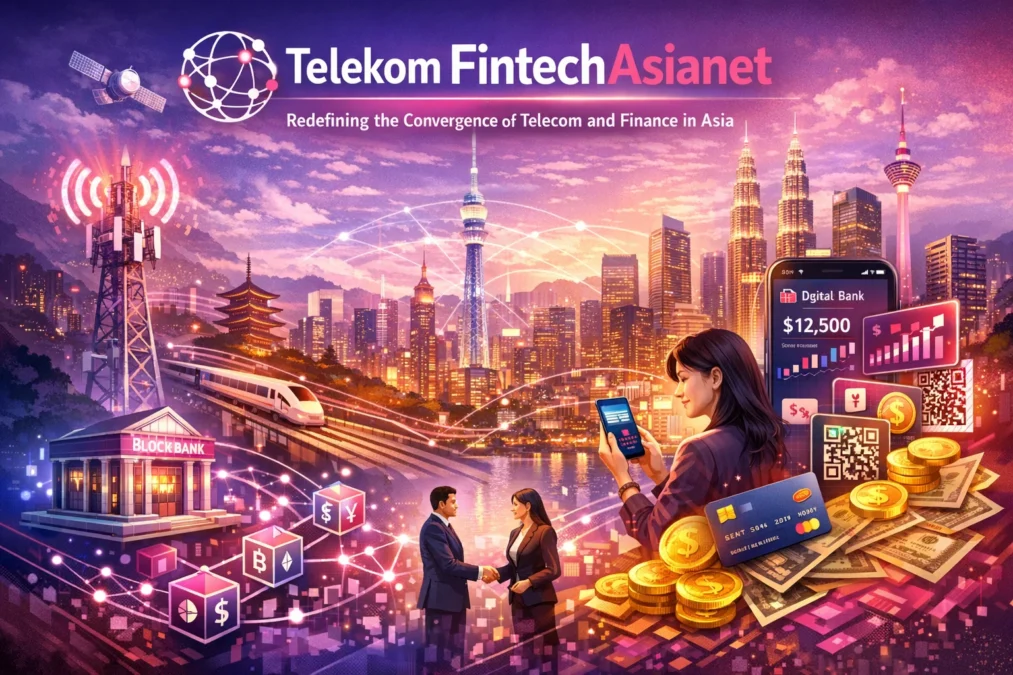
Driving Financial Inclusion Across Underserved Populations
The most celebrated impact of the Telekom FintechAsianet movement is its monumental role in advancing financial inclusion. In many Asian and African nations, a large percentage of the population remains unbanked or underbanked, physically distant from brick-and-mortar banks. Telecom networks, however, have penetration rates that far exceed those of traditional banks. By leveraging this existing reach, Telekom FintechAsianet projects bring essential financial tools directly to people’s fingertips, requiring only a basic mobile phone. This accessibility is breaking down decades-old barriers to economic participation.
This inclusion has tangible socio-economic effects. Small-scale farmers can receive payments for crops directly, freelancers can get paid for gig work securely, and families can manage household finances with greater control and lower cost. The ability to save small amounts digitally protects funds and can help users build a financial identity. As a leading analyst for digital economies in emerging markets noted, “The Telekom FintechAsianet model isn’t just competing with banks; it’s building an entirely parallel financial universe for those the old system left behind, fostering resilience and entrepreneurship at the grassroots level.” This foundational work is arguably the model’s most significant contribution.
Technological Infrastructure and Innovation Engine
The technological backbone of any Telekom FintechAsianet operation is a masterclass in leveraging existing assets for new purposes. Telecoms possess critical infrastructure: secure, scalable cloud platforms, nationwide distribution networks of agents and stores, and sophisticated customer identity verification systems (often tied to SIM registration). This allows them to deploy financial services rapidly and at a lower marginal cost than a startup building from zero. Their core network becomes the secure channel for every transaction, ensuring reliability and reach even in remote areas.
Innovation within this framework is relentless. Operators are integrating artificial intelligence to assess creditworthiness using alternative data like airtime purchase history and call patterns, enabling lending to customers with no formal credit history. Blockchain technology is being explored for enhancing transparency in remittances and supply chain finance. Furthermore, the rollout of 5G networks by these telecoms will unlock new possibilities for real-time, high-value financial services and the Internet of Things (IoT)-based payments, ensuring the Telekom FintechAsianet ecosystem remains at the cutting edge. This constant evolution is key to maintaining its competitive advantage.
Navigating the Complex Regulatory Landscape
Operating at the intersection of two heavily regulated industries—telecommunications and finance—presents a unique challenge for Telekom FintechAsianet ventures. Regulatory frameworks for banking, payments, anti-money laundering (AML), and data privacy were largely designed for traditional institutions and often struggle to keep pace with innovative hybrid models. Success hinges on proactive engagement with regulators, advocating for “test-and-learn” environments like regulatory sandboxes that allow for safe innovation. Navigating this labyrinth is a core competency for these organizations.
Different markets present different hurdles. Some countries have created specific digital banking or payment service provider licenses that accommodate telecom-led models, while others maintain stricter separation between telecom and finance. A key ongoing debate revolves around data sovereignty and privacy: how customer data from telecom activities can be used for financial services under laws like GDPR or local equivalents. The most successful Telekom FintechAsianet entities are those that build regulatory expertise into their DNA, viewing compliance not as a barrier but as a strategic component of building long-term trust and operational legitimacy.
Competitive Dynamics and Market Positioning
The landscape in which Telekom FintechAsianet operates is fiercely competitive, characterized by a multi-sided battle. On one flank are traditional banks, which are digitizing rapidly and sometimes partnering with or acquiring fintechs to retain customers. On the other hand, there are agile, pure-play fintech startups that excel in user experience and niche product innovation. Then there are the global tech giants (Big Tech), with their massive platforms and data advantages, making their own forays into financial services. The Telekom FintechAsianet model carves its space by exploiting a distinct competitive moat: unparalleled direct customer access and distribution.
This competitive analysis table breaks down the key battlegrounds:
| Competitor Type | Primary Advantage | Key Vulnerability | Telekom FintechAsianet Counter-Strategy |
|---|---|---|---|
| Traditional Banks | Trust, regulatory expertise, full-service suite | Physical distribution limits, legacy IT systems, high cost-to-serve | Leverage vast agent network for low-cost onboarding, offer faster, cheaper core services (payments, transfers) |
| Pure-Play Fintech Startups | Agile innovation, superior UX/UI, focused products | Customer acquisition cost, lack of scale, often narrow product set | Leverage existing massive customer base for cross-selling, use infrastructure for lower operational costs |
| Big Tech (e.g., Alipay, Grab) | Massive platform ecosystems, rich data, advanced AI | May lack direct telecom control/infrastructure, regulatory scrutiny on dominance | Double down on network reliability and security, leverage direct billing relationship, form strategic alliances |
Strategic Partnerships and Ecosystem Development
No Telekom FintechAsianet entity operates in a vacuum; strategic partnerships are the lifeblood of ecosystem expansion. Successful players act as platforms, orchestrating a network of partners to deliver value. Common partnerships include collaborations with global financial networks (like Visa or Mastercard) to issue virtual or physical cards, tying the mobile wallet to the global payment grid. Partnerships with retailers, utility companies, and government agencies are crucial for expanding the biller network, making the platform a one-stop solution for everyday financial needs.
Furthermore, many are partnering with traditional banks and insurance companies in a “coopetition” model. A bank might provide the balance sheet for lending products, while the telecom provides the customer interface, data, and distribution. Similarly, insurance companies can offer underwritten products distributed through the telecom’s channel. These symbiotic relationships allow the Telekom FintechAsianet ecosystem to offer a broader range of sophisticated products faster than it could build alone, while partners gain access to a vast new customer segment. This collaborative approach is defining the next phase of growth.
Risk Management and Security Imperatives
Handling financial transactions inherently brings significant risks, making robust risk management the bedrock of any successful Telekom FintechAsianet operation. Cybersecurity threats are paramount, as platforms become high-value targets for fraudsters. Implementing bank-grade encryption, multi-factor authentication, and continuous transaction monitoring systems is non-negotiable. Beyond cyber threats, these entities must manage financial risks such as credit risk (for lending products), liquidity risk (ensuring customer withdrawals can always be met), and operational risk across a vast agent network.
A unique challenge is agent network management. Thousands of individuals acting as cash-in/cash-out points can be a source of fraud, money laundering, or poor customer service. Mitigating this requires rigorous agent training, robust monitoring systems, and clear incentive structures that reward compliance. Building a strong culture of security and compliance from the top down is essential. The trust required for people to entrust their money to a Telekom FintechAsianet platform is fragile; a single major security breach or fraud scandal can undo years of progress, making risk management a central strategic priority, not just a technical function.
The Future Trajectory and Emerging Trends
The future of Telekom FintechAsianet is poised to move beyond foundational payments into more sophisticated, embedded finance. We are seeing the emergence of “Banking-as-a-Service” (BaaS) models, where telecoms white-label their financial infrastructure for other businesses—like e-commerce sites or ride-hailing apps—to offer branded financial products. This turns the telecom’s fintech arm into an invisible, high-margin utility for the entire digital economy. Another trend is the deepening of wealth management and investment offerings, bringing stock trading, mutual funds, and micro-pension products to the mass market.
Furthermore, the integration of Decentralized Finance (DeFi) principles and Central Bank Digital Currencies (CBDCs) presents both a challenge and an opportunity. Forward-thinking Telekom FintechAsianet players are exploring how their platforms could become key nodes for distributing and transacting in CBDCs or providing secure gateways to blockchain-based financial services. The core thesis remains unchanged: leveraging connectivity to facilitate value exchange. As the definitions of both “money” and “connectivity” evolve, the most adaptable Telekom FintechAsianet ecosystems will shape the next generation of global finance.
Conclusion
The ascent of the Telekom FintechAsianet model marks a definitive turning point in the narrative of global financial services. It is a powerful demonstration of how infrastructure built for one purpose—communication—can be ingeniously repurposed to solve a more fundamental human need: economic access and agency. By turning SIM cards into financial identities and cell towers into conduits for capital, this convergence has already uplifted millions, proving that inclusion and innovation are not mutually exclusive but can be powerfully synergistic.
Looking ahead, the journey is far from complete. The model will continue to evolve, facing regulatory headwinds, technological disruptions, and intense competition. Yet, its core strengths—massive distribution, inherent trust, and strategic positioning—provide a formidable foundation. The story of Telekom FintechAsianet is ultimately a story of adaptation and ambition, showing that in the digital age, the most impactful financial institutions might not be banks at all, but the networks that connect us. They have redefined the battlefield, and in doing so, are redefining prosperity itself for a significant portion of the world.
Frequently Asked Questions (FAQ)
What exactly is Telekom FintechAsianet?
Telekom FintechAsianet is not a single company but a conceptual model representing the strategic convergence of telecommunications (“Telekom”) and financial technology (“Fintech”) with a particular focus on its impact within Asian markets (“Asianet”). It describes initiatives where telecom operators leverage their network, customer base, and infrastructure to offer digital financial services like mobile money, payments, loans, and insurance.
How does Telekom FintechAsianet improve financial inclusion?
The Telekom FintechAsianet model dramatically improves financial inclusion by using the extensive reach of mobile networks, which often surpasses bank branch penetration. It allows individuals with only a basic mobile phone, even without a traditional bank account, to perform financial transactions, save digitally, access credit, and receive payments securely, thereby bringing them into the formal digital economy.
What are the main services offered under this model?
Core services typically include mobile wallets and money transfers, bill payments, merchant payment solutions, and airtime top-ups. Advanced Telekom FintechAsianet platforms expand into microloans and credit, micro-insurance products (e.g., for health or crops), cross-border remittances, and increasingly, savings and investment products, creating a comprehensive digital financial ecosystem.
Is my money safe with a Telekom FintechAsianet service?
Reputable Telekom FintechAsianet operators invest heavily in bank-grade security measures, including encryption, fraud monitoring systems, and transaction limits. They are also subject to financial regulatory oversight in most jurisdictions. However, as with any financial service, users should practice good security hygiene, like protecting their PIN and being aware of scams. The track record of major operators in safeguarding funds is generally strong.
How does this model compete with traditional banks?
Telekom FintechAsianet competes with banks on accessibility, cost, and convenience. It often has a lower cost structure, avoiding expensive physical branches, and can offer transactions at a lower fee. Its primary advantage is reaching customers that traditional banks cannot or will not serve. Rather than always competing directly, many successful models now partner with banks, which provide the licensed financial backbone while the telecom handles customer-facing distribution and experienc
You May Also Read
The Unfading Power of Jeanne Bonnaire Hurt: An Enduring Legacy of Cinematic Truth


